September12026
Ep4: Historian John Ragosta takes us back to July 1776 when Thomas Jefferson began writing the Declaration of Independence — Season 1, “The Democracy We Must Keep”


September 2026 — This month on the David O. Stewart Show, we discuss Chapter 3 in “The Democracy We Must Keep” and learn about the Declaration of Independence and Thomas Jefferson in July, 1776.
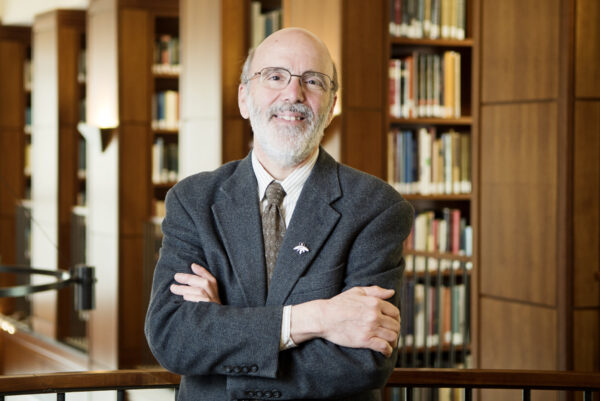
In today’s conversation: David interviews John Ragosta, the inaugural James Madison Fellow at Montpelier
About our guest: John was previously the Interim Director of the International Center for Jefferson Studies at Monticello and is the Faculty Director of the Summer Jefferson Symposium at the University of Virginia. He has taught law and history at the University of Virginia, George Washington University, and Hamilton, Oberlin, and Randolph Colleges. Dr. Ragosta’s most recent book is For the People, For the Country: Patrick Henry’s Final Political Battle. He is also the author of Religious Freedom: Jefferson’s Legacy, America’s Creed, and several other works. Ragosta, an award-winning author and frequent commentator, holds both a PhD and a JD from UVA; he received an honorary doctorate from Hampden-Sydney College. He is also a beekeeper.
Learn more: johnaragosta.com
Among the questions David asks John include:
- In the Spring of 1776, Richard Henry Lee of Virginia rose in the Continental Congress to present three resolutions – what were they?In fact, the whole process seems to have been Richard Henry Lee’s idea – why don’t we remember him?
- What was the sentiment toward independence in the Congress, and across the thirteen colonies-now-becoming-states?
- Why wasn’t George Washington involved?
- We know that committee asked Jefferson to take on the first draft – why him? And how long did Jefferson take to produce his draft? Did he have any models to work from? Did the other committee members participate in that initial drafting? What are the strengths and weaknesses of Jefferson’s draft?
- Specifically focusing on the bill-of-indictment part of the Declaration, the many specific complaints about Britain that nobody much pays attention to today – was it important then? Why? Why did it become neglected?
- What should the Declaration mean to Americans today?
Don’t miss it!
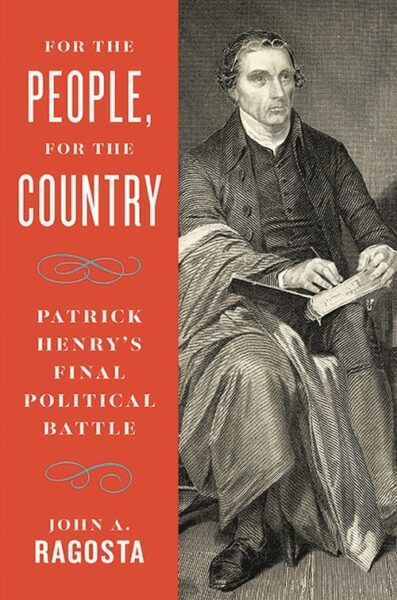
“For the People, For the Country” by John Ragosta
About For the People, For the Country: Patrick Henry’s Final Political Battle: In 1799, at the behest of President George Washington, Patrick Henry came out of retirement to defend the Constitution that he had once opposed and to thwart Thomas Jefferson and James Madison, whom Washington accused of putting party over country and threatening the fragile union. For the People, For the Country tells the remarkable story of how the most eloquent public speaker of the American Revolutionary era and a leading antifederalist during debates over ratification of the Constitution reemerged on the side of the federalists and once again changed history.
Much more than a fire-breathing demagogue, the Patrick Henry we encounter here comes to life as a principled leader of the young nation who believed above all in working with a government elected by the people, advocating for political change in “a constitutional way”―at the ballot box. A gripping narrative, this book will change long-held views of this great Founding Father.
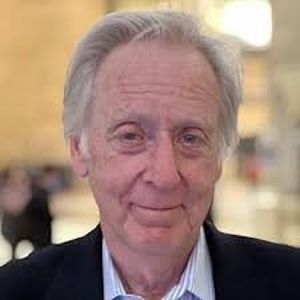
Author and historian David O. Stewart
Meet David O. Stewart: A trial and appellate lawyer for many years, David writes history and historical novels. He has received the Lifetime Achievement Award from the Washington Independent Review of Books, was a reporter for the Staten Island Advance, and for 10 years wrote the monthly Supreme Court column for the American Bar Association Journal. He has also done on-air commentary for CNN, C-SPAN, Bloomberg News, and MSNBC.
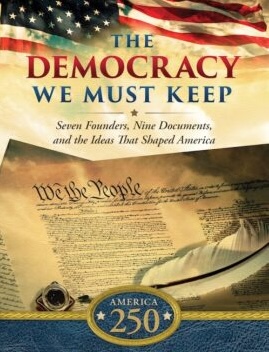
About his newest book, The Democracy We Must Keep:
What did America’s founders say about democracy—and can we remain true to their vision for America? Two hundred fifty years ago, passionate men attempted to create something the world had never seen before: a nation built not on kings or armies, but on ideas where the people ruled. In The Democracy We Must Keep, historian David O. Stewart takes readers inside the nine key documents that shaped the formation of the United States—from Patrick Henry’s thunderous cry for liberty to the carefully crafted design of a government chosen by the people, with limits on all officials holding power under the Constitution.
Through the words of seven visionary founders—Washington, Jefferson, Madison, Hamilton, Gouverneur Morris, and others—Stewart shows how a fragile experiment in self-government took shape. These men were not saints. They argued passionately. They worried that the new nation might fall apart. Yet together, they forged the principles that must still define American democracy: That power must be limited. That leaders must answer to the people. That individual rights must be protected by law.
As the United States celebrates its 250th anniversary, The Democracy We Must Keep urges readers to rediscover core ideas that built the nation—and to consider what it will take to protect them. Accessible, engaging, and timely, this book is for anyone who wants to understand how American democracy started, and why it still matters. Learn more: davidostewart.com • Click here to buy David’s books